
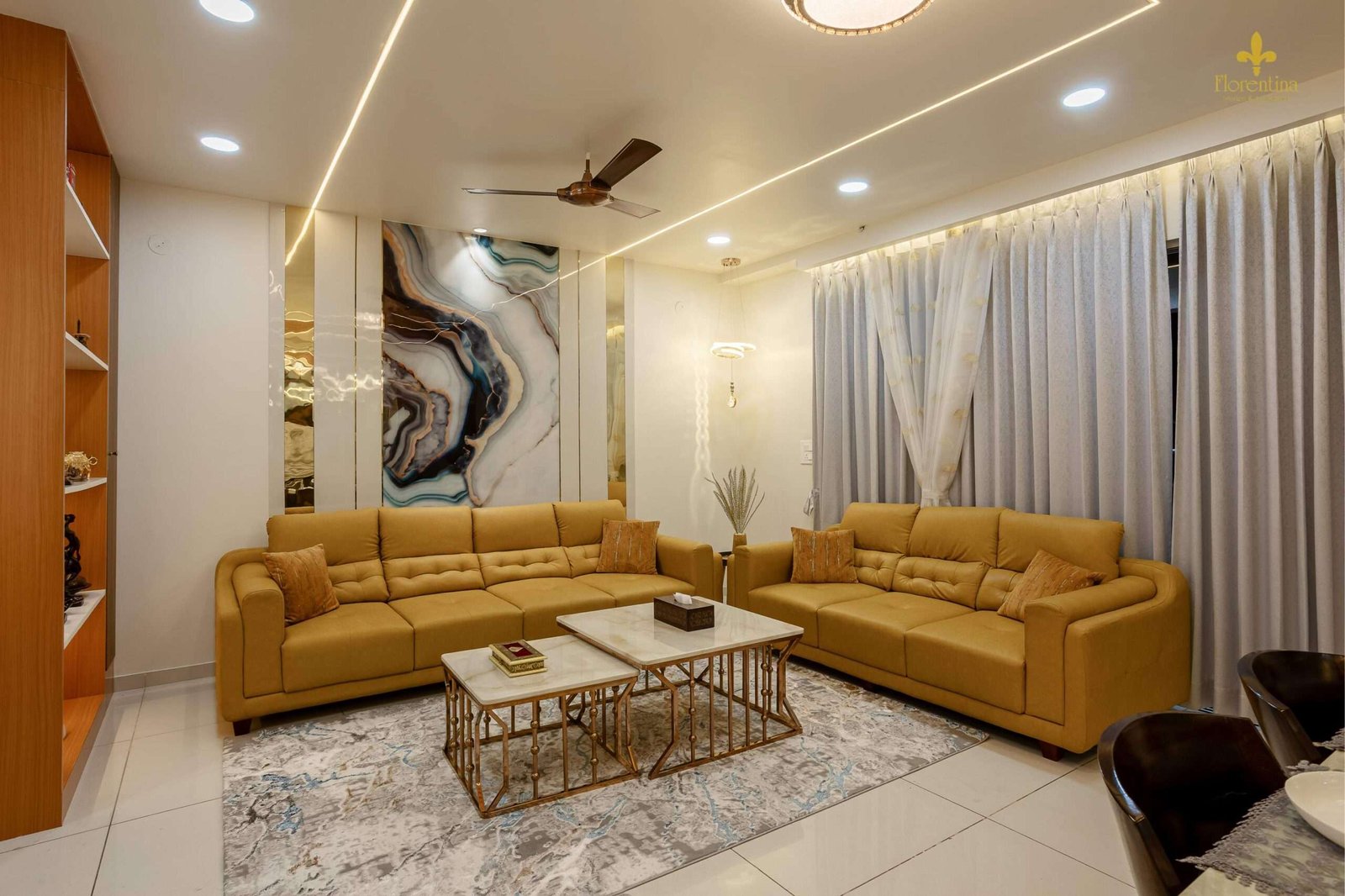
Choosing furniture is about more than finding a style you love. The size of your furniture can significantly affect how comfortable, spacious, and functional your living room feels. A sofa that is too large can make a room feel cramped, while furniture that is too small may make a large space look empty and unbalanced.
The right furniture size should work with the dimensions of your room, allow comfortable movement, and complement the overall interior design. With thoughtful space planning, you can create a living room that feels stylish, comfortable, and practical.
At Florentina Interiors, we believe that furniture selection and space planning should work together to create interiors that are both aesthetically pleasing and functional.
Why Furniture Size Matters in Interior Design
Furniture is one of the most visually dominant elements in a living room. Its proportions influence the entire layout and determine how easily people can move around the space.
Choosing the right furniture size can help you:
- Make better use of available floor space
- Maintain comfortable walking areas
- Create a balanced furniture arrangement
- Improve the functionality of the room
- Make a small room appear more spacious
- Give a large room a more comfortable appearance
- Create better visual harmony between furniture and décor
Before buying furniture, it is therefore important to understand your room dimensions and how you plan to use the space.
1. Measure Your Living Room First
The first step in choosing furniture is measuring the available space.
Measure the length and width of the room and note the position of doors, windows, balconies, electrical points, built-in storage, and other permanent features.
Do not measure only the open floor area. Consider the complete layout and identify areas that need to remain accessible.
For example, a large sofa may technically fit inside a room, but if it blocks a doorway or leaves very little space for movement, it may not be the right choice.
Create a simple floor plan and mark potential furniture positions before making a purchase.
2. Consider the Size of Your Sofa
The sofa is usually the focal point of a living room, so its size should be carefully considered.
For a compact living room, a streamlined two- or three-seater sofa may work better than a large sectional. In a larger living room, an L-shaped sofa or a combination of sofas and accent chairs can create a more comfortable seating arrangement.
When choosing a sofa, consider:
- Room dimensions
- Number of people using the space
- Available wall length
- Door and window positions
- Walking space
- Coffee table placement
- Overall interior style
The goal is to select a sofa that provides enough seating without overwhelming the room.
3. Leave Enough Space for Movement
One of the most common furniture planning mistakes is filling a room with too many large pieces.
Your living room should have clear circulation paths so that people can comfortably move between the sofa, entrance, dining area, balcony, and other parts of the home.
Avoid placing furniture where it creates narrow or awkward pathways.
Instead, think about how people naturally move through the room and arrange furniture around those movement patterns.
Good space planning can make even a compact living room feel more open and comfortable.
4. Choose the Coffee Table According to the Sofa
A coffee table should be proportional to the sofa and the available seating area.
A table that is too large can make the seating arrangement feel crowded, while a very small table may look disconnected from the rest of the furniture.
Consider the distance between the sofa and coffee table as well as the available walking space around it.
Round or oval coffee tables can work particularly well in compact spaces because they reduce sharp corners and can make movement easier.
For larger rooms, a rectangular or larger centre table can help anchor the seating arrangement.
5. Select Accent Chairs Based on Available Space
Accent chairs are a great way to add additional seating and personality to a living room. However, they should not make the room feel overcrowded.
Before selecting an accent chair, check:
- Its width
- Seat depth
- Overall height
- Distance from the sofa
- Space required for movement
- Relationship with the coffee table
In smaller living rooms, lightweight chairs with a visually open design can help maintain a spacious appearance.
In larger rooms, two accent chairs can be positioned opposite or beside the sofa to create a more balanced conversation area.
6. Think About Furniture Proportion and Scale
Furniture should be proportional not only to the room but also to other elements within the space.
For example, placing a very large sectional next to a small coffee table can create a visual imbalance. Similarly, a tiny sofa against a large empty wall may make the room appear unfinished.
Try to create a relationship between:
- Sofa size
- Coffee table size
- Side tables
- TV unit
- Rug dimensions
- Lighting fixtures
- Wall décor
- Room height
A well-balanced combination creates a more cohesive and professionally designed appearance.
7. Choose Furniture According to Your Room Shape
Every living room has a different layout, and furniture should be selected accordingly.
Small Rectangular Living Room
Use compact seating and avoid filling both long walls with bulky furniture. A simple sofa, compact coffee table, and one or two accent pieces may be enough.
Square Living Room
A symmetrical seating arrangement can work particularly well. You can position a sofa opposite the TV unit and add chairs or additional seating to create a balanced layout.
Open-Plan Living Room
In an open-plan home, furniture can help visually define the living area. A sofa can act as a subtle divider between the living and dining spaces without completely closing the room.
Large Living Room
Large rooms can accommodate bigger sofas, sectional seating, accent chairs, larger rugs, and statement furniture. However, avoid spreading furniture too far apart, as this can make the room feel disconnected.
8. Don’t Forget the TV Unit and Storage
Furniture planning should include more than just seating.
If your living room includes a TV unit, display shelves, cabinets, or storage furniture, consider their dimensions before finalizing the seating arrangement.
A TV unit that is too large can dominate a small room. On the other hand, a very small unit may look disproportionate on a large wall.
Built-in storage and customized furniture can be useful when you want to make the best use of available space while maintaining a clean appearance.
9. Use a Rug to Connect the Furniture
A properly sized rug can visually connect different furniture pieces and make a living room feel more cohesive.
Ideally, the rug should relate to the seating arrangement rather than appearing like a small isolated decoration.
For larger living rooms, a larger rug can accommodate the front legs of sofas and chairs. In smaller spaces, choose a rug that fits comfortably within the seating zone without overwhelming the floor area.
10. Consider Ceiling Height and Vertical Proportion
Furniture size is not only about floor dimensions.
The height of your ceiling can also influence how furniture looks in the room.
Rooms with higher ceilings can accommodate taller storage units, larger artwork, statement lighting, and furniture with greater visual presence.
For rooms with lower ceilings, furniture with a lower profile can help maintain a more open appearance.
Using vertical elements such as tall curtains, wall-mounted storage, or appropriately scaled artwork can also improve the overall proportion of the space.
11. Don’t Buy Furniture Before Measuring Doorways
A surprisingly common problem is purchasing furniture that fits the living room but cannot easily enter the home.
Before ordering large furniture, measure:
- Main entrance door
- Internal doorways
- Staircases
- Lift dimensions
- Passageways
- Balcony or service entrances if relevant
Also check whether the furniture can be turned around corners or moved through narrow passages.
Proper planning can prevent unnecessary delivery and installation problems.
12. Consider Your Lifestyle
The ideal furniture size depends on how you actually use your living room.
A family that frequently entertains guests may need more seating, while someone living in a compact apartment may prioritize flexibility and open floor space.
Think about:
- Number of family members
- Frequency of entertaining guests
- Children or pets
- Need for storage
- Work-from-home requirements
- TV viewing habits
- Preference for open space
- Future furniture requirements
Furniture should support your lifestyle rather than simply fill the room.
Furniture Size Tips for Small Living Rooms
If you have a compact living room, a few simple decisions can make a significant difference.
Choose:
- Compact sofas
- Slim-profile furniture
- Multi-functional pieces
- Wall-mounted TV units
- Furniture with built-in storage
- Nesting tables
- Lightweight accent chairs
- Furniture with visible legs
Avoid using too many bulky pieces in one room.
A carefully planned layout can make a small living room feel comfortable without sacrificing style.
Furniture Size Tips for Large Living Rooms
Large living rooms require a different approach. Using only small furniture can make the room appear empty and disconnected.
Instead, consider:
- Larger sectional sofas
- Multiple seating zones
- Larger coffee tables
- Accent chairs
- Statement lighting
- Large area rugs
- Decorative consoles
- Larger artwork
Rather than pushing all furniture against the walls, consider creating a central seating arrangement. This can make a large room feel more inviting and balanced.
Common Furniture Sizing Mistakes to Avoid
Buying Without Measuring
Never rely only on visual judgment. Always measure the room and furniture before purchasing.
Choosing Oversized Furniture
Large furniture may look impressive in a showroom but can overwhelm a compact home.
Using Too Many Pieces
More furniture does not necessarily mean better design. Leave enough open space for comfortable movement.
Ignoring Door and Window Positions
Furniture should not obstruct important access points or natural light.
Choosing Furniture Individually
Each furniture piece should work with the rest of the room. Consider the complete layout rather than buying individual pieces separately.
Forgetting Future Requirements
Think about how your space may change over time. Flexible and multifunctional furniture can make future changes easier.
Create a Balanced Living Room With Professional Space Planning
Choosing the right furniture size is ultimately about finding the right balance between comfort, functionality, proportion, and aesthetics.
Before purchasing furniture, measure your room, consider circulation, understand your lifestyle, and visualize how every piece will work together. A thoughtful furniture layout can transform even a compact living room into a comfortable and stylish space.
Florentina Interiors combines interior design with architectural principles to create functional and personalized interiors. The company offers interior architectural designing, civil work and construction, and project management services, with a focus on customized solutions and space planning.
If you are planning a new living room or complete home interior in Pune, professional interior planning can help you select furniture, layouts, materials, and finishes that work together seamlessly.
Final Thoughts
The right furniture is not necessarily the biggest, most expensive, or most stylish piece available. It is the furniture that fits your room, supports your lifestyle, and works naturally with the rest of your interior.
By paying attention to measurements, proportions, circulation, room shape, and functionality, you can create a living space that feels spacious, comfortable, and visually balanced.
A well-planned living room should not simply look beautiful—it should make everyday living easier and more enjoyable.