A designed home is not only about beautiful furniture and wall colors. The ceiling also plays a role in making your interiors look great. Today people who own homes are focusing on ceiling ideas that’re stylish and work well. These ideas can turn rooms into nice living spaces.
Choosing the false ceiling design can help with lighting make a room look bigger, hide wires and create a fancy feel in your home.
However, with options out there picking the perfect ceiling style can be confusing. There are types of ceilings like gypsum, POP, wood and modern LED designs. Each one has its benefits.
In this blog we will help you choose the ceiling solution for your home. We will consider your home’s needs, style and budget.
We will guide you on how to pick the ceiling solution.
Understand the Purpose of a False Ceiling
Before choosing a ceiling style you need to know why you want it. A false ceiling design is not just for looks; it also has benefits.
It hides things, like wires, air conditioning ducts and uneven concrete surfaces.
It also makes the room sound better. Improves lighting.
If you want your ceiling to look good you can pick patterns with LED lights.
If you want to save energy, choose materials that keep your room at a temperature. Knowing what you want will help you pick the ceiling for your home.
Consider the Size and Height of Your Room
The size of your room is very important when picking a ceiling style.
For rooms simple ceiling designs work best because they make the room look bigger. Heavy or layered designs can make the room feel small.
If your room has a ceiling you can try out some really cool things like creative layers, wooden textures and hanging lighting fixtures. Your modern false ceiling design should go well with the size of your room not make it feel smaller.
For apartments it is better to have clean lines and soft lighting. Big houses can have fancy and artistic ceiling ideas.
Choose The Right Material
The material you pick is very important because it decides how long your ceiling will last, how much work it needs and what it will look like. Here are some popular options:
Gypsum Ceiling
I really like Gypsum ceilings because they are not too heavy and can last for a time. They are also very easy to put up and give a smooth finish. This is why Gypsum ceilings are great for homes that have a style.
POP (Plaster of Paris)
POP ceilings are very versatile. Can be made to look really nice with different patterns. A lot of people in India like to use POP ceilings in their homes because they look very elegant.
Wooden Ceiling
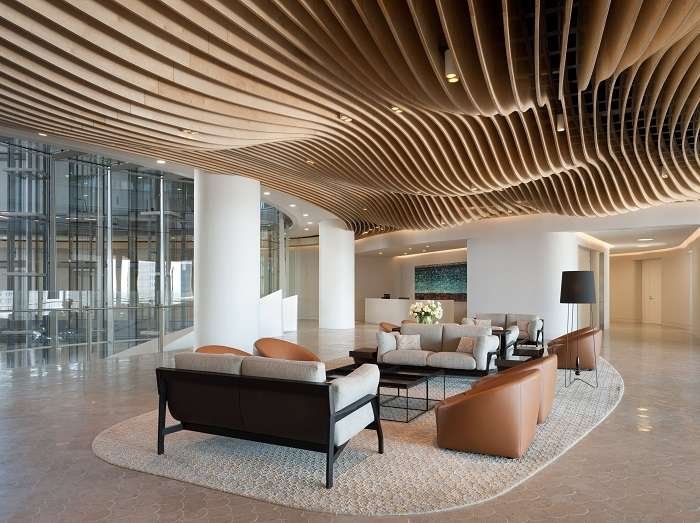
Wooden ceilings make a room feel warm and fancy. They are perfect for bedrooms and living rooms and other places where you want to feel luxurious.
Metal Ceiling
Metal ceilings are very strong. Can withstand moisture, which makes them great for kitchens and offices.
When you choose the material, for your false ceiling interior you can be sure that it will look good and work well for a very long time.
Focus on Lighting Integration
Lighting can really make a room look different. A lot of ceilings have LED strip lights, spotlights and cove lighting to make the room feel fancy.
Lighting that is warm makes a room feel cozy, which is great for bedrooms and living rooms.. Lighting that is bright and white is better for kitchens and places where you work. You should think about how you want to set up your lighting before you finish your ceiling.
A ceiling that is well planned and has lighting that is part of it makes the room look nice and work well. It also helps show off areas of your home like where you eat or watch movies.
Match the Ceiling with Your Interior Theme
Your ceiling should look like it belongs with the rest of your home. If your home is modern you should get a ceiling, with patterns and shapes that are geometric. If your home is traditional it looks nice with decorations that’re fancy and textures that are warm.
When it comes to ceiling styles minimalist homes look really good with ceilings and hidden lights. On the other hand luxury interiors usually have a lot of patterns and expensive finishes.
If you pick a false ceiling design that matches the rest of your home it will look nice and make your home feel more welcoming.
Keep Your Budget in Mind
When you are choosing a ceiling style you need to think about how much money you want to spend. Ceilings with a lot of layers and fancy lights can cost a lot more than ones.
Before you start your project talk to the person who is designing your home or the contractor. This will help you avoid spending much money later on. Just because a ceiling is beautiful does not mean it has to be expensive. Simple ceilings can look really nice if you plan them well.
You should also think about how much it will cost to take care of your ceiling. Some materials need to be cleaned and fixed all the time. Others are stronger and will not cost as much in the long run.
Consider Maintenance and Durability
A ceiling should not only look attractive but also be easy to maintain. Moisture-resistant materials are ideal for humid climates and kitchens. Dust-resistant finishes help maintain cleanliness with minimal effort.
Durability is another important factor. High-quality materials may cost more initially, but they last longer and reduce repair expenses in the future.
Choosing a durable false ceiling design ensures that your home interiors remain attractive and functional for many years.
Popular Ceiling Design Trends
Interior design trends keep changing, and ceilings are no exception. Some of the latest trends include:
- LED cove lighting ceilings
- Wooden panel ceilings
- Geometric layered designs
- Minimalist white ceilings
- Floating ceiling concepts
- Smart ceilings with integrated lighting systems
Modern homeowners prefer stylish yet functional ceiling ideas that enhance comfort and aesthetics simultaneously.
Mistakes to Avoid While Choosing a Ceiling
A lot of people who own homes make mistakes when they are putting in ceilings. Here are some things you should not do:
Choosing designs that’re too complicated for small rooms
Not thinking about how high the room is
Using materials that’re not good
Not thinking about lighting before you start
Spending much money on things that you do not need
If you plan everything properly you can have a ceiling that looks good and works well and you will not have to worry about it not working right. Ceiling trends, like LED cove lighting ceilings and Wooden panel ceilings can be really great if you do them correctly.
Conclusion
The ceiling style you pick can really change how your home feels. It can make the lighting better, make your home look nicer and even make it more useful. The right ceiling can add a touch of class. Make your home worth more.
When you are picking a ceiling you should think about how big the room is, what it is made of, the lighting, how hard it is to take care of and how much money you want to spend. A ceiling that is well designed can make your home look really nice. Also make it a comfortable place to live.
You might like a modern look or you might like a fancy ceiling, with lots of layers. Either way, getting the right ceiling style will make your home look better and really impress people.